



AI Ethics, Risks, and Safe Practices in Legal Drafting



ChatGPT and Legal Documents: How Far Can It Go?
ChatGPT has quickly become one of the most talked-about AI tools in the legal industry, and with good reason. Its ability to generate structured text, summarize lengthy materials, and rephrase complex ideas has made it a valuable tool across many industries, including law. Some consider it to be the best AI for contract drafting. But when it comes to legal documents, it’s important to understand that ChatGPT plays a supporting role, not a leading one.
This is Part 3 of our series on AI and contracts. If you’re new here, start with Part 1: What AI contract drafting is and when to use it, then Part 2: Tools — ChatGPT, Harvey, Spellbook, LawGeex. In this article, we cover ethics, key risks, and a practical checklist for using AI safely in legal drafting.
1. What does ChatGPT do well?
- Summarizing content. Legal professionals are constantly navigating dense, technical documents – legislation, contracts, case law, policies. ChatGPT can break this content down into more digestible summaries, helping you or your team quickly grasp the key points.
- Editing and rewording. Need to rephrase a clause for clarity? Or adjust the tone for a client-friendly version of a document? Generative AI contract drafting tools like ChatGPT excel at rewriting content, simplifying legalese, and tailoring messages for different audiences. It’s a useful tool for polishing text and making legal content more accessible.
- Searching for relevant information. While it doesn’t browse the internet in real time (unless connected to a live web tool), ChatGPT can often point users toward relevant legal research. It’s helpful for guiding legal research or brainstorming where to look next, especially when you’re unfamiliar with the legal landscape of a particular issue.
2. Where ChatGPT falls short?
- It does not understand the legal context. While ChatGPT can mimic legal language, it doesn’t truly “understand” the law or your specific situation. It doesn’t know your business, your goals, your risk tolerance, or which laws apply to your case. What it produces is based on patterns, not professional judgment. That means it can suggest clauses that look right but miss critical context or protection.
- It is not always legally accurate. ChatGPT isn’t trained on live legal databases or jurisdiction-specific rules. It may reference outdated laws, confuse legal systems, or produce text that doesn’t align with current regulations. If you’re relying on it for legal accuracy, you may end up with documents that aren’t enforceable, or worse, expose you to liability.
- It is not immune to bad prompts. The quality of ChatGPT’s output depends entirely on the quality of the input. If your prompt is vague, contradictory, or lacks legal detail, the result will reflect that. It won’t question your assumptions or identify missing information; it simply generates a response based on what it’s told, regardless of whether that leads to sound legal content.
- It is not a substitute for legal strategy. Drafting language is only one part of contract work. Negotiation, understanding commercial realities, managing risk, and aligning terms with business goals all require strategic thinking. ChatGPT doesn’t plan ahead, anticipate consequences, or tailor advice to your broader legal and commercial context.
- It is not good at drafting documents. Most of what ChatGPT generates are basic, shallow templates filled with generic clauses. If you don’t guide it with detailed, legally sound input, you’ll end up with something incomplete or unbalanced. Experienced lawyers can spot an AI-generated contract from a mile away – it lacks the nuance, structure, and strategy that real legal work requires.
- It is not responsible for mistakes. Perhaps the most important limitation: ChatGPT carries no legal responsibility. If the contract it helped generate turns out to be flawed or unenforceable, you, not the AI, are accountable. There’s no malpractice insurance for AI, no recourse, no duty of care.
ChatGPT is a powerful writing assistant, not a legal authority. It can help you move faster, especially in the early stages of drafting or research, but it should never be used as a substitute for professional legal review. Use it to enhance your legal workflow – not to define it.
Risks and Ethical Concerns of AI Contract Drafting
AI tools have transformed how we approach text-based tasks. Their ability to generate structured documents quickly makes them appealing, especially for entrepreneurs and individuals looking to save time and money. However, relying on AI for legal contract drafting is fraught with risks and ethical concerns that can lead to serious consequences. While AI can assist with brainstorming, it lacks the judgment, context, and accountability of a human lawyer. Below, we explore the primary reasons why contract drafting with AI should not be used as a standalone solution for legal document drafting and the ethical implications of doing so.
1. The danger of incomplete or inaccurate input
The first and most critical reason to avoid relying solely on contract drafting with AI is its complete dependence on the quality of the input you provide. If you feed AI incomplete, vague, or inaccurate information, it will produce equally flawed output without realizing the errors. Unlike a human lawyer, AI doesn’t ask clarifying questions to ensure the document aligns with your specific needs, business goals, or legal context.
For example, if you request a contract for a “business partnership” without specifying the industry, jurisdiction, or key terms, AI might generate a generic template that omits critical protections, such as clauses for intellectual property or tax obligations. A lawyer would probe for details about your business model, potential risks, or regulatory requirements, ensuring the contract is tailored and robust.
AI’s inability to validate or question your assumptions can lead to documents that are legally unsound or irrelevant to your situation. Ethically, this raises concerns about accountability, as users who rely on contract drafting with AI without verifying its output may inadvertently mislead clients, partners, or stakeholders by presenting flawed contracts as valid, exposing them to financial or legal harm.

Don’t trust your legal safety to AI
2. The limits of AI’s legal knowledge
AI-generated contracts often contain errors, omissions, or legal gaps that are obvious to trained lawyers but may go unnoticed by non-lawyers. These flaws can render a contract unenforceable or expose parties to significant risks. For instance, AI might produce clauses that sound convincing but are outdated, conflict with current regulations, or fail to address jurisdiction-specific nuances, such as differing contract laws between states or countries. A common issue is AI omitting critical provisions like indemnification, limitation of liability, or dispute resolution clauses, which are essential for protecting parties in case of conflicts or breaches. In some cases, AI may even generate contradictory terms within the same document.
For example, granting exclusive rights in one clause while allowing non-exclusive use in another creates ambiguity that could be exploited in court. The legal field is dynamic, with new laws, amendments, and case law emerging almost daily, yet AI often lacks access to real-time legal databases and may rely on information that is years out of date. Many AI models, including ChatGPT, warn of limited access to recent data, which is a critical gap in a field where a single new regulation can change a contract’s enforceability. Ethically, producing or sharing AI-drafted contracts without professional review is problematic, as it can mislead non-lawyers into believing they are legally protected when, in reality, their documents may be riddled with errors that invite disputes or liability.
3. The confidentiality risks
One of the most serious concerns with AI contract drafting tools is the issue of data privacy. If you enter sensitive information, like personal details, financial terms, or business plans, into free or public AI platforms, there’s a real chance that data could be stored, shared, or reused without your knowledge. These tools often don’t guarantee where your information goes or how it’s handled. That’s why it’s risky to share confidential or personal data with AI systems. To avoid leaks and wording mistakes, keep contract drafting lawyer-led rather than AI-only.
4. The illusion of a solid contract
One of the most dangerous aspects of contract drafting using AI is the false sense of security it provides. AI-generated documents often look polished and professional, filled with legal jargon that appears convincing to non-lawyers. However, a contract’s appearance doesn’t guarantee its enforceability or effectiveness. Entrepreneurs who chose contract drafting using AI may believe they are legally protected, only to discover their documents are “not worth the paper they’re printed on” when challenged in court or during a dispute.
For example, an AI-drafted non-disclosure agreement (NDA) might seem robust but fail to include specific confidentiality terms, leaving sensitive information unprotected. In court, judges and opposing counsel can easily spot the weaknesses in AI-generated contracts, such as vague language, missing provisions, or a lack of strategic foresight, which can lead to the contract being deemed unenforceable. Many business owners don’t realize how problematic their AI-drafted contracts are until they face a lawsuit or their agreement is scrutinized in a legal setting, resulting in financial losses or failed business deals. Ethically, this overreliance on AI without acknowledging its limitations can harm clients or partners who trust these documents.
5. The strategic value of legal expertise
Many non-lawyers mistakenly believe that drafting a contract is as simple as filling out a standard template. In reality, a legal contract requires far more than plugging details into a form. It demands strategic thinking, risk assessment, and customization to meet specific needs. While lawyers often use templates, these are carefully vetted, reviewed, and tailored to each client’s unique circumstances. A lawyer also considers your business model, potential risks, and future disputes, editing terms to mitigate issues that AI tools for contract drafting cannot anticipate.
For example, in the terms and conditions, a lawyer will accurately foresee all the nuances of your activities, determine what exactly needs to be stated, what type of services you provide, and accordingly foresee the points at which you need to be protected. AI-based contract drafting tools, by contrast, produce generic outputs that lack this level of foresight or customization, often failing to align with your broader legal and commercial goals. Ethically, bypassing professional expertise for a task as complex as contract drafting can lead to agreements that fail to protect your interests, potentially causing financial or reputational harm. Relying on AI in contract drafting without understanding its limitations undermines the strategic role of legal work and risks producing documents that are inadequate for real-world challenges.
AI in contract drafting can be a valuable assistant for tasks like brainstorming, summarizing legal content, or generating ideas, but it is not a replacement for a qualified lawyer. To use AI tools for contract drafting responsibly, treat them as a supportive tool within a broader legal workflow. Always involve a lawyer to review and refine AI-generated drafts, ensuring your contracts are legally sound, tailored to your needs, and capable of withstanding scrutiny in practice or court. By leveraging AI-based contract drafting tools’ strengths while acknowledging their pitfalls, you can enhance efficiency without compromising on quality or ethics.
Best Practices: How to Use AI Safely in Legal Drafting
How can you use AI-based contract drafting tools safely in legal drafting without falling into the traps of errors, legal gaps, or false security? This section outlines best practices for leveraging AI’s strengths while avoiding its risks, ensuring your legal documents remain robust and reliable.
Prioritize professional legal expertise over AI tools for contract drafting
The safest and most effective approach to legal drafting is to consult a qualified lawyer, particularly for high-stakes matters like contracts, business structures, or legal disputes. A lawyer brings strategic insight, tailoring documents to your specific business goals, industry regulations, and potential risks. For example, when launching a new product, a lawyer can draft contracts that protect your intellectual property, anticipate disputes, and align with your long-term strategy – tasks AI cannot perform reliably. While specialized AI tools designed for legal proofreading and review exist, they are often expensive and still fall short of a lawyer’s expertise. These tools, such as contract analysis platforms, can assist with tasks like clause identification or compliance checks, but they require professional oversight to ensure accuracy. If you have questions about a contract clause, a trademark application, or your business’s legal structure, a lawyer’s guidance is indispensable. They provide not just a document but a roadmap for navigating legal complexities, which AI cannot replicate. By prioritizing human expertise, you avoid the pitfalls of AI’s limitations, such as outdated information or missing critical clauses, as discussed earlier.
Safe uses of AI and contract drafting: leveraging its strengths
While AI should not be used for drafting legal contracts from scratch or handling sensitive legal tasks, it excels in non-legal, creative, and organizational functions that can support your business. When used correctly, AI can enhance your workflow without compromising legal integrity. Here are some safe and effective ways to use AI:
- Brainstorming content ideas: AI is excellent for generating ideas for marketing content, such as blog posts, emails, social media updates, or video scripts. For instance, you can prompt AI to suggest 10 campaign ideas for a new product launch, creating a list to refine with your team. However, always review AI-generated content carefully, as it may include inaccuracies or require adjustments to align with your brand’s voice and goals.
- Outlining business strategies: AI can help structure sales funnels, marketing plans, or customer engagement strategies. For example, you might ask AI to outline a sales funnel for a subscription service, including steps like lead capture, nurturing, and conversion. These outlines provide a starting point but should be customized by your team to reflect market realities and business objectives.
- Automating website features: AI is well-suited for drafting chatbot scripts or automation sequences for your website. For instance, you can use AI to create a conversational flow for a customer service bot, ensuring it addresses common queries efficiently. These scripts should be tested and refined to ensure they meet user needs and maintain a professional tone.
- Generating FAQs and knowledge bases: AI can produce draft FAQs or knowledge base entries for your website or product. For example, you might ask AI to generate FAQs for a new software tool, covering topics like features, pricing, and support. These drafts should be reviewed to ensure accuracy and compliance.
- Simulating customer feedback: AI can act as a hypothetical client reviewing your product or service, offering insights into potential objections or concerns. For instance, prompting AI to “review my product as a skeptical customer” can help you identify weaknesses in your offering and prepare responses. This feedback is a starting point, but should be validated through real customer testing.
- Drafting non-legal descriptions: AI can create initial drafts of product or course descriptions for marketing purposes. For example, you might use AI to write a compelling description for an online course, which you can then refine to ensure it resonates with your target audience. These drafts are safe because they don’t carry legal weight, but still require human editing for quality.
Checklist for safe AI use in contracts
If you decide to use AI in your legal workflows, be aware that it is at your sole risk. However, follow these best practices to maximize its benefits while minimizing risks:
- Use AI as a starting point, not a final product: Treat AI as a tool for generating rough drafts or ideas, such as an initial outline of a contract’s structure. Always have a lawyer review and refine the output to ensure it’s legally sound and tailored to your needs.
- Provide clear, detailed prompts: AI’s output quality depends on your input. For example, if using AI to summarize a contract, specify the key clauses or terms you want highlighted to avoid vague or incomplete results.
- Verify AI outputs against reliable sources: Cross-check AI-generated content with up-to-date legal resources or consult a lawyer to confirm accuracy. For instance, if AI suggests a clause, verify it complies with current regulations in your jurisdiction.
- Disclose AI use to stakeholders: Be transparent with clients or partners if AI was used in any part of your process. This builds trust and ensures they understand and accept all possible risks.
- Invest in professional review: Even if you use AI to save time, allocate resources for a lawyer to review all legal documents. This ensures your contracts are enforceable, compliant, and aligned with your business strategy.

Set up review/CLM the safe way
Conclusion
AI has undoubtedly revolutionized how we work, bringing speed and efficiency to countless business processes. In the legal sphere, tools can assist with brainstorming ideas, summarizing existing content, or organizing early drafts. But when it comes to the actual practice of law, drafting enforceable agreements, interpreting legislation, managing legal risk – AI is no substitute for a qualified legal professional.
As this article illustrates, AI cannot grasp legal nuance, assess commercial risk, or ensure compliance with jurisdiction-specific rules. It can generate convincing text, but not legally sound advice. Businesses that rely too heavily on AI for legal documentation may find themselves facing unenforceable terms, missed protections, or costly disputes. While AI and contract drafting together offer valuable automation benefits, they cannot replace the strategic thinking and legal judgment of a qualified lawyer.
Using AI for legal contract drafting can significantly reduce turnaround times, but it still requires human oversight to ensure legal accuracy and contextual relevance. Use AI where it adds value: as a tool to boost productivity, not as a replacement for legal judgment. And when it comes to contracts, filings, or strategic legal decisions, always involve a lawyer.

Need a safe drafting and review process?

Looking for a reliable payment processing system?
Order selection of a payment solution.
Similar articles
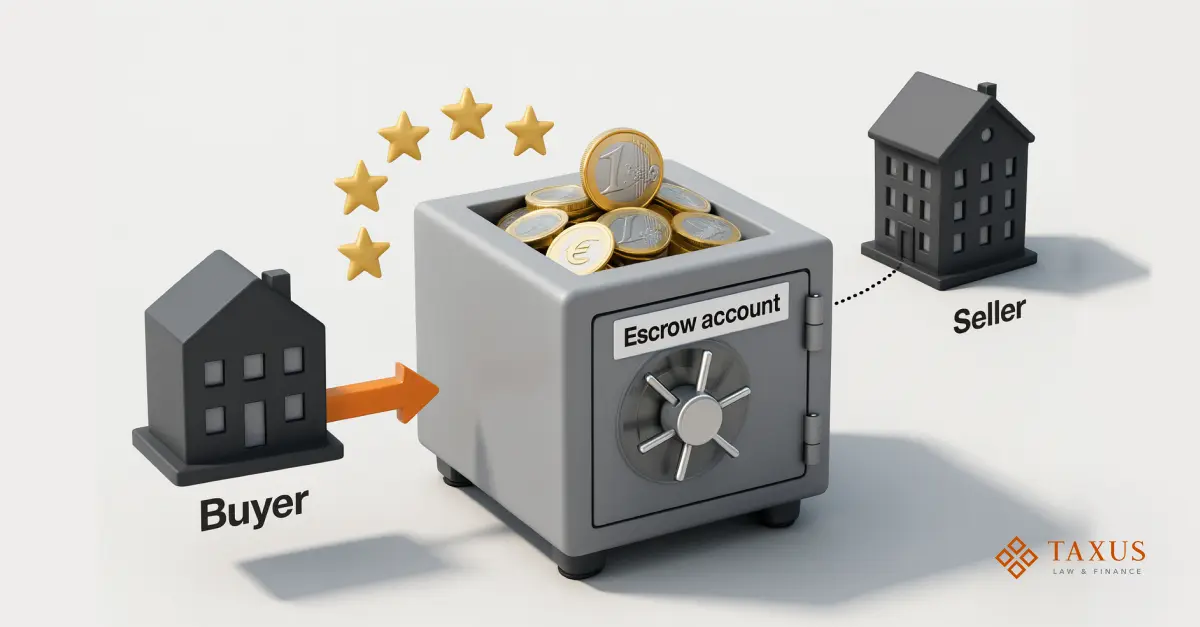
Escrow account: how the conditional holding of funds works
10 December 2025
