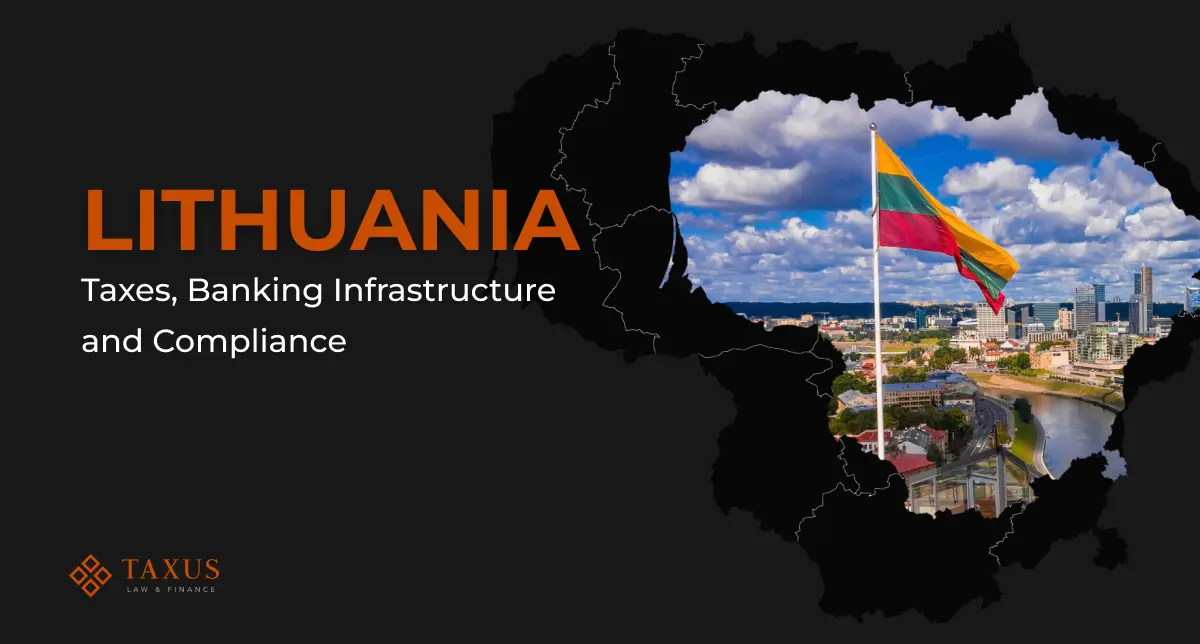
Lithuania as an EU Business Hub for IT Companies: Taxes, Banking Infrastructure and Compliance



For IT companies, SaaS projects, and digital service providers, choosing a jurisdiction has long ceased to be only about tax burden. Today, founders evaluate a broader set of factors: access to the EU market, opportunities to work with banks and payment providers, compliance requirements, the country’s reputation, and potential for scaling.
Among European jurisdictions, Lithuania has attracted particular attention from technology companies in recent years. The country is actively developing its fintech sector, supporting digital business transformation, and offering a clear regulatory environment for companies operating with clients across Europe.
At the same time, Lithuania is not a “tax haven” or a universal solution for every type of business. Its main advantage lies in the combination of a strong European reputation, developed payment infrastructure, and transparent rules for doing business.
Why Lithuania stands out among jurisdictions for IT companies
A recognised European fintech and payments hub
Lithuania has become one of the notable fintech hubs in the European Union. Over the past decade, the country has developed a strong financial technology ecosystem, attracting payment institutions, electronic money institutions (EMIs), and digital financial platforms.
For IT companies, this means access not only to EU banking infrastructure, but also to an environment where financial institutions and service providers are familiar with SaaS, digital services, and other online business models.
This is particularly relevant for SaaS platforms, subscription-based services, B2B platforms, and online payment-driven businesses, where reliable integration with the European financial system is critical.
A practical jurisdiction for SaaS, software and digital services
Many IT companies do not need complex corporate structures — the key factors are predictability, the ability to serve international clients, and access to the EU legal framework.
This is why Lithuania is often used as an operational jurisdiction for:
- SaaS companies
- software development firms
- IT consulting businesses
- digital agencies
- product-based tech companies
A Lithuanian company can serve as an operational hub for clients across the EU and for engaging international contractors, benefiting from access to the single European market.
Company incorporation (UAB) and practical timelines
The standard corporate form used by IT businesses in Lithuania is a UAB (private limited liability company). Core incorporation requirements include:
- founder and shareholder details, with identification or corporate documents for foreign founders
- a company name and registered office address in Lithuania
- articles of association and an incorporation act or agreement
- appointment of a company manager
- an accumulation account and initial cash contributions of at least EUR 1,000 before registration
In practice, incorporation typically takes from a few working days up to 1–2 weeks, depending on:
- ownership structure
- completeness of documentation
- KYC/AML verification requirements
- involvement of non-resident shareholders
If you are still choosing a jurisdiction for a digital business, it is also worth considering company formation in Estonia and comparing the requirements for the corporate structure, operating model, and banking infrastructure.
Stronger reputation compared to traditional offshore structures
In recent years, banks, payment providers, and corporate clients have significantly increased their transparency requirements.
In this context, Lithuania – as an EU jurisdiction – offers a predictable regulatory environment aligned with European corporate governance and financial transparency standards.
This positively affects how companies are perceived by:
- banks
- payment service providers
- corporate clients
- investors
- international partners
The main value of a Lithuanian company is not tax optimisation, but reputation, access to the EU market, and regulatory credibility.
A suitable solution for EU-oriented business models
Lithuania is particularly suitable for companies already operating or planning to operate in the European market.
For example, if a business:
- sells services to EU-based clients
- works with European contractors
- issues cross-border invoices
- builds long-term EU market presence
- plans expansion across Europe
In such cases, an EU-registered entity can simplify contractual relationships and integration into the European business environment, provided the structure reflects the actual operating model.
Corporate taxation overview in Lithuania for IT companies
Taxation matters when selecting a jurisdiction, but for IT companies regulatory stability, predictability, and alignment with EU standards are equally important.
Lithuania offers a competitive and transparent tax environment within the European legal framework, which is particularly relevant for internationally active businesses.
Key tax indicators
| Tax item | Overview |
| Corporate income tax (CIT) | Standard rate – 17% |
| VAT | Standard rate – 21% |
| Dividend tax | Depends on structure and applicable rules |
| Employment taxes | Applied under Lithuanian legislation |
| Cross-border operations | Governed by EU tax regulations |
Corporate income tax rate
As of 2026, the standard corporate income tax rate in Lithuania is 17%. Certain small business categories may qualify for reduced rates or preferential regimes, provided they meet specific criteria.
VAT registration
Not all companies are required to register for VAT immediately after incorporation.
VAT registration depends on:
- type of services provided
- revenue thresholds
- cross-border activity within the EU
- structure of transactions
Tax context for IT companies
For SaaS, software development, and digital service companies, the key advantage is the ability to operate within a stable EU framework recognised by banks, investors, and corporate clients.
Tax planning and aggressive tax structuring: key differences
Lithuania follows the EU approach to tax transparency and the prevention of aggressive tax structuring. A Lithuanian company should therefore have a clear business rationale and activities consistent with its declared model.
Legitimate tax planning uses instruments provided by law. Structures created solely for artificial profit shifting without underlying activity may attract scrutiny from tax authorities and financial institutions.
For IT companies, the following elements are particularly important:
- real operational activity
- actual clients and enforceable contracts
- proper documentation of business transactions
- transparent ownership structure
- alignment between legal structure and business model
VAT, employment taxes and cross-border considerations
The standard VAT rate in Lithuania is 21%, however the applicable VAT treatment depends on the nature of services, counterparties, and transaction geography.
For SaaS platforms and digital services operating across several EU jurisdictions, VAT treatment may require a preliminary review of tax and accounting matters.
Employment-related taxation must also be taken into account. In international teams, companies may face questions related to payroll taxes, social security contributions, and employee tax residency across jurisdictions.
As businesses scale, international structuring, transfer pricing, and multi-jurisdiction tax alignment become increasingly relevant.
Payment infrastructure and banking reality in Lithuania for IT companies
For IT companies, payment infrastructure is as important as taxation: a corporate structure has limited practical value if the business cannot open an account or process international payments.
Access to the European payment ecosystem
A Lithuanian company can operate within the EU and SEPA payment framework.
For SaaS, software development, and digital service companies, this supports work with EU clients through SEPA transfers, international bank payments, and modern payment solutions.
For subscription-based businesses and recurring revenue models, this infrastructure is essential for operational stability.
Banks and fintech providers
Unlike traditional jurisdictions where businesses depend almost exclusively on banks, Lithuania offers a broader financial ecosystem.
In addition to traditional banks, companies may work with electronic money institutions (EMIs) and fintech providers offering:
- corporate accounts
- international payments
- multi-currency solutions
- tools for managing international teams
- integration with accounting and digital platforms
This is particularly relevant for remote-first companies or businesses operating across multiple jurisdictions.
Opening a corporate bank account: key considerations
Despite the developed financial infrastructure, opening a bank account in Lithuania is not a purely formal process.
EU banks and financial institutions apply AML/KYC controls. During onboarding, companies are typically asked to provide:
- ownership structure and UBO details
- business model description
- source of funds
- client and counterparty information
- proof of real economic activity
For IT companies with a transparent structure, this is generally a standard compliance procedure.
Banking practice: expectations vs reality
A common misconception is that company incorporation automatically guarantees access to a business bank account. In practice, each application is assessed individually based on the risk profile of the business.
Typical compliance expectations vary by industry:
- SaaS / software development – standard scrutiny
- IT consulting – standard scrutiny
- fintech projects – enhanced scrutiny
- crypto-related businesses – enhanced scrutiny
- high-risk business models – high level of due diligence
For this reason, it is important to assess not only the corporate structure, but also the banking and payments model before incorporation.
Preparing for compliance requirements
The quality of the business case and supporting documents directly affects banking onboarding, especially for international payment flows, fintech models, and multi-entity structures.
Our team specialising in payment solutions helps clients prepare the compliance profile and supporting documents. The final decision remains with the financial institution under its internal policies and regulatory obligations.

Need payment infrastructure that fits your business model?
Compliance requirements for IT companies in Lithuania
Lithuania, as an EU jurisdiction, follows a compliance-focused framework. For IT companies, this extends beyond incorporation and taxation to reporting, ownership transparency, and relevant EU standards.
For IT companies, this extends beyond taxation and includes broader obligations related to reporting, ownership transparency, and adherence to EU regulatory standards.
Corporate reporting and accounting
Every company in Lithuania is required to maintain proper accounting records and submit financial statements in accordance with national legislation and EU-aligned accounting standards.
In practice, this includes:
- ongoing bookkeeping and accounting records
- preparation of annual financial statements
- submission of tax declarations
- proper retention of corporate documentation
For IT businesses with international structures, it is also essential to properly document cross-border transactions and contractual arrangements with clients and contractors.
AML, KYC and ownership transparency
Lithuania applies EU AML (Anti-Money Laundering) and KYC (Know Your Customer) standards, so banks and financial institutions conduct due diligence on companies.
This typically includes assessment of:
- corporate ownership structure
- ultimate beneficial owners (UBO)
- overall business model
- sources of funds
For companies with a clear and transparent structure, these checks are generally a standard part of onboarding and ongoing compliance.
GDPR and data protection
As an EU member state, Lithuania applies the General Data Protection Regulation (GDPR).
This is particularly relevant for IT companies, SaaS platforms, and digital services operating with users across multiple European jurisdictions.
In practice, this includes:
- responsible handling of personal data
- defined data storage and processing policies
- baseline cybersecurity measures
- controlled access to sensitive information
Substance and economic presence
Economic substance is not a single checklist that applies identically to every company.
Its relevance depends on the business model, tax position, banking requirements, and whether the activity is regulated. The company’s functions, contracts, and financial flows should match its stated commercial rationale.
Depending on the business model, relevant indicators may include:
- management or operational functions
- active business processes
- relationships with clients or contractors
- documented operational activity
Lithuania for fintech, crypto and payment-focused IT projects
Lithuania offers a developed fintech ecosystem, but financially regulated projects require a more precise assessment than standard IT businesses.
For IT companies, this creates additional opportunities, but also requires a more precise understanding of the regulatory environment.
When a standard company structure is not enough
For traditional IT models such as SaaS, software development, or digital services, a standard corporate structure is usually sufficient.
However, in more regulated or financially sensitive business models, the situation becomes more complex.
These may include:
- payment service providers
- online payment processing businesses
- e-money solutions
- cryptocurrency platforms
- fintech infrastructure products
In such cases, incorporation is only the first step, as the operational model may require additional regulatory assessment or licensing.
Payment institutions and electronic money institutions
Lithuanian regulation allows for licensing of various types of financial services, including Payment Institutions (PI) and Electronic Money Institutions (EMI).
These structures are typically used by companies involved in:
- payment processing
- holding or transferring client funds
- digital wallets
- fintech platforms with transactional infrastructure
These activities face requirements that are significantly higher than those for standard IT companies, including detailed review of the business model, governance, revenue sources, and operational structure.
Crypto-asset services under MiCAR
From 2026, companies that professionally provide crypto-asset services covered by MiCAR must obtain authorisation as a crypto-asset service provider (CASP) from the Bank of Lithuania. Certain already-authorised financial institutions follow a notification procedure. Incorporating a UAB does not itself authorise crypto-asset services.
A practical view of the regulatory environment
Lithuania is open to financial innovation while applying EU financial stability and consumer protection rules. Businesses gain access to a developed ecosystem, but should plan for strict compliance from the outset.
For businesses, this results in two key implications:
- access to the EU financial services market
- strict compliance requirements from the outset
Importance of proper business model assessment
A common early-stage mistake is failing to assess whether a product falls within financial regulation.
Even if a product appears to be a pure IT solution, its functionality may trigger payment or financial service regulation, which changes the entire compliance and structural framework.
For this reason, it is essential at the planning stage to correctly classify the business model in order to determine:
- whether a licence is required
- which regulatory framework applies
- how banking and payment provider relationships will be structured
This assessment is best completed before incorporation to reduce the risk of costly restructuring later.
Ultimately, regulatory outcomes always depend on the specific business activity and applicable legislation.
When Lithuania may not be the best choice
Despite its advantages, Lithuania is not suitable for every business model. The choice should reflect the company’s target markets, operating structure, banking needs, and long-term objectives.
While Lithuania offers a stable regulatory environment and strong access to the EU market, certain business models may face additional challenges related to banking, compliance, or regulatory requirements.
High-risk business models
For companies operating in higher-risk sectors, banking and financial relationships may be more challenging regardless of jurisdiction.
These typically include:
- certain financial and investment products
- crypto and digital assets with elevated risk profiles
- high-velocity transaction business models
- other activities requiring enhanced financial scrutiny
In such cases, the key factor is not the jurisdiction itself, but the overall transparency and regulatory compliance of the business.
Lack of economic substance in the EU
Another critical factor is the presence (or absence) of real economic substance within the European Union.
Lithuania is best suited for companies that:
- work with EU-based clients
- have contractors or partners in Europe
- plan to scale within the European market
- conduct real operational activity in the region
A purely formal connection to Lithuania or the EU may lead to additional questions during banking and payment compliance checks.
The role of proper structural assessment
Jurisdiction selection should therefore be assessed together with banking requirements, compliance considerations, and the company’s actual operating model.
Engaging professionals experienced in international corporate structures and payment infrastructure helps identify risks in advance and design a more resilient EU operating model.
This is especially relevant for IT companies planning to scale or working with payment flows, where early structural mistakes can limit access to financial services later on.
Ultimately, the final decision always depends on the specific business model and strategic objectives of the company.
Conclusion
Lithuania holds a strong position among EU jurisdictions for IT, SaaS, and digital businesses. Its key value is not tax optimization, but the combination of a transparent regulatory environment, a developed fintech ecosystem, and access to the European Union market.
For companies building a long-term EU presence, banking infrastructure, compliance requirements, and operational stability often matter more than taxation alone.
At the same time, Lithuania works best when the corporate structure reflects the real business model and actual markets of operation.
FAQ
Is Lithuania a good jurisdiction for IT companies?
Yes. Lithuania can be a strong choice for IT companies, SaaS businesses, fintech-related projects, and digital service providers when the business has a clear operational logic within the EU.
Its main value lies in the combination of access to the European market, a well-developed fintech ecosystem, and a transparent regulatory environment.
What is the corporate tax rate in Lithuania?
As of 2026, the standard corporate income tax rate in Lithuania is 17%.
Reduced rates or special regimes may apply to certain categories of small businesses, provided specific eligibility criteria are met.
Can a Lithuanian company open a business bank account?
Yes, but the process depends on several factors.
Banks and financial institutions typically assess:
- ownership structure and UBO details
- company’s business model
- geographic distribution of clients
- supporting documentation and sources of income
- overall risk profile
A decision is made case by case following the institution’s KYC/AML procedures.
Is Lithuania suitable for fintech companies?
Yes. Lithuania has a developed fintech ecosystem. However, regulated activities such as payment services, e-money operations, or crypto-asset services may require separate authorisation and full regulatory compliance.
Do IT companies in Lithuania need real substance?
There is no single substance model for all companies. The appropriate level depends on the business model, tax situation, banking requirements, and activity.
For banking onboarding and regulated business, the structure should reflect actual functions, contracts, management, and financial flows.
Our team supports international companies entering the European market and can assess the practical aspects of company registration in Lithuania.
Looking for a reliable payment processing system?
Order selection of a payment solution.
Similar articles